
Will County 72-Hour Release Window
No official Will County Sheriff page produces a chronological list labeled “released in the last 72 hours.” The Sheriff Press inquiry is still valuable because a historical booking detail can show the exact Release Date and time. It must be searched person by person. The current-oriented Public inquiry answers a different question: whether the displayed subject is now in Will County custody.
A rolling 72-hour interval starts exactly three days before the check. A three-calendar-day review can start at midnight on the first selected date. State which method is being used. The Sheriff portal does not calculate either one. Booking From Date and Booking To Date are booking-date controls, so they cannot be used as release-date filters. Read the release timestamp from each matching booking instead.
Check Will County Three-Day Releases
The three-day process focuses on separate custodial episodes. A person can have several Will County bookings, and a historical detail may show an old release beside a newer stay. Identity, booking number, court docket, charges, and physical descriptors help select the right event.
- Write down the exact beginning and ending time of the 72-hour interval.
- Search the Sheriff Press inquiry for the known person.
- Open the matching subject and separate each booking number.
- Compare the latest relevant Release Date and time with the selected interval.
- Check the Public inquiry for a newer booking or present Will custody.
- Read the court docket or contact the jail to clarify the legal event and destination.
If only the past day matters, the Will County 24-Hour Release List guide uses a tighter same-day check. Neither method turns the archive into a complete countywide feed.
Will County Three-Day Record Fields
The Press record is stronger than a roster disappearance because it ties a time to a distinct booking. Field coverage varies. A blank release reason or destination should lead to a records request, not an invented conclusion.
| Field | How to use it |
|---|---|
| Subject and identifiers | Reduce same-name errors before comparing dates. |
| Booking number | Separates one jail stay from another. |
| Booking date/time | Marks the start of custody, not release. |
| Release date/time | Tests whether that booking ended in the chosen 72-hour window. |
| Prisoner type and facility | Adds context about the custodian and booking. |
| Charges, court, and docket | Connects the jail episode to legal records. |
| Multiple bookings | Warns that an older release may not describe current status. |
The official Press inquiry shown below includes the archive search and photo column.
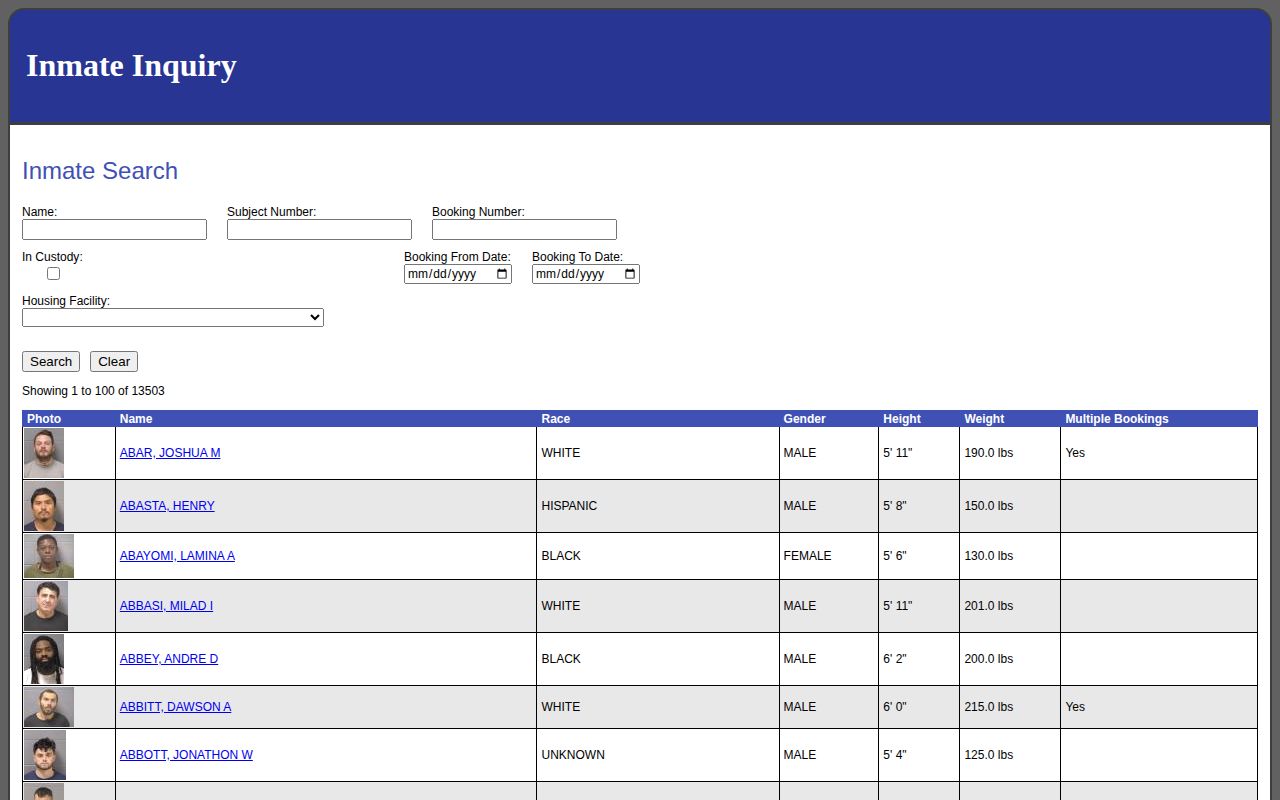
Its retained entries support a known-person review across several days, but the interface does not sort all subjects by recent release time.
Will County Weekend Release Timing
A 72-hour view is most useful after a weekend or holiday. A Monday check can include Friday, Saturday, and Sunday events that a 24-hour interval would omit. Still, no official Will County rule was found promising release at a set hour or early processing before a weekend. The Sheriff’s recorded timestamp is the proper measure of the actual booking end.
Court activity and physical jail processing are separate. A judge may authorize release, yet staff must complete the custodial process. VINE may then receive an agency-feed event. Each source can carry a different time. Likewise, a court sentence to IDOC points toward transfer, not immediate freedom. Check the relevant booking and the docket rather than estimating the outcome from the day of the week.
The three-day range also needs a consistent boundary. A release at the exact start time belongs in the set only if the chosen rule treats the starting instant as inclusive. Write the range into a records request instead of using broad phrases such as “over the weekend.” This gives the Sheriff a reproducible query and helps distinguish a late Thursday event from an early Friday event.
No verified archive-retention period or update cadence was found for the Sheriff interfaces. A three-day review may therefore change as data is added. Preserve the booking number and request an official record when a durable result is needed.
Request Will County Release Sets
A complete list of all bookings ended during the interval requires a focused Sheriff records request. Send it to the FOIA Administrator at 16911 West Laraway Road, Suite 101, Joliet, Illinois 60433, fax it to 815-727-8565, email foia@willcosheriff.org, use the online form, or deliver it by mail or in person. Give start and end timestamps with the time zone. Ask for data fields that already exist.
A useful request seeks booking number, booking date and time, release or discharge date and time, recorded release type or destination, receiving agency if recorded, prisoner type, booking origin, charges, and an available booking photo. For a person-specific request, add identifiers and the known booking number. Electronic delivery keeps the request narrow. Illinois FOIA normally gives a public body five business days for a noncommercial response, with a possible statutory extension.
Review the Sheriff’s FOIA request and fee page before submitting.
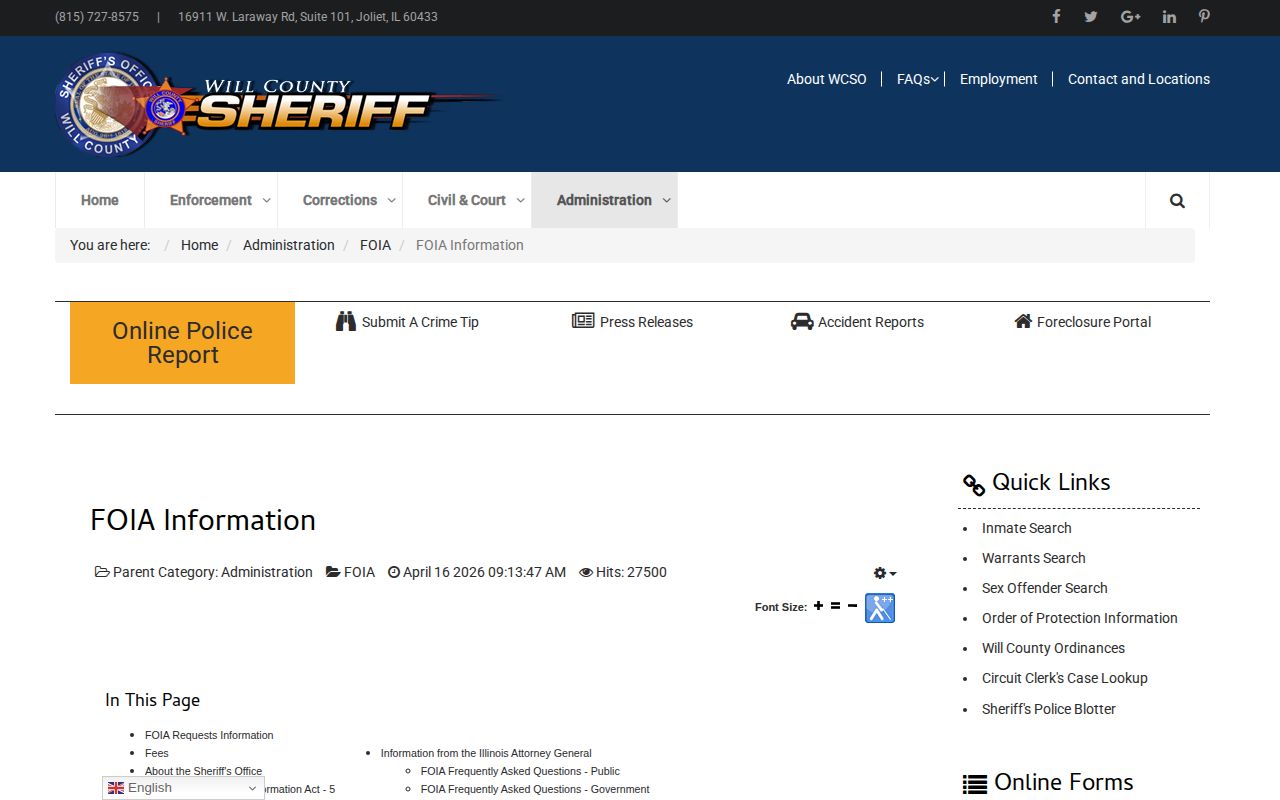
The first 50 black-and-white letter or legal pages are free, later pages may be 15 cents per page, and electronic records ordinarily cost only the recording medium used. Exempt material may be redacted while a separable public portion is released.
Will County Release Verification Routes
For urgent confirmation, call the Will County Adult Detention Facility at 815-740-1250 or use its official contact route. Illinois VINE is useful when registration occurred before the event. A release or transfer alert is not a permanent archive and may lag the physical process, so compare it with the Sheriff timestamp. The Will Circuit Clerk iPublic docket may show a dismissal, time-served sentence, probation order, pretrial release, or IDOC commitment, although the online view is limited and not the official court record.
If the booking ended through transfer, change systems. IDOC records cover state prison custody and active parole or mandatory supervised release. The Bureau of Prisons locator covers federal sentences. ICE’s locator is separate and has limited recent-release visibility. No public US Marshals Service release locator exists. Custodian, rather than the facility’s location in Will County, determines which system can verify the next step.
Note: An ended Sheriff booking may mean transfer; confirmation of the next custodian is needed before calling it community release.
Will County Release Archive Limits
The Sheriff Public and Press interfaces have complementary roles. Public is geared toward current status and includes an In Custody control. Press holds a far larger historical subject set, photos, release timestamps, and multiple-booking histories. Neither offers a rolling three-day feed. This local design is useful for verifying one person but cannot answer “everyone released this weekend” without a formal data request.
A historical release entry must also be read with later bookings. The same subject can leave the Adult Detention Facility, return under a new booking number, and appear in current custody again. Conversely, release from the Sheriff may be followed by an IDOC admission. Keeping the booking number with the timestamp prevents an old event from being presented as the latest status.
Records can also disappear or remain for reasons unrelated to a new release. Court material may be sealed, expunged, impounded, or absent from the limited online portal. An IDOC record may return “not found” after full sentence and parole discharge. The Sheriff Press archive has no published retention guarantee. Use missing data as a cue to switch channels, not as proof of an event.
Search Release Records
Sponsored Results